- tyler@kirail.com
- +86 15603721115
The following is a comprehensive overview of the forging process and the unique characteristics of forged parts.
1. What is Forging?
Forging is a fundamental metal manufacturing process that utilizes localized compressive forces (typically applied by hammers, presses, or rolling machines) to alter the shape of metal. This process can be performed at various temperatures:
1) Hot Forging: The metal is heated above its recrystallization temperature, rendering it highly ductile and easier to shape into complex forms.
2) Cold Forging: The metal is shaped at or near room temperature; this process increases strength through work hardening but requires greater applied force.
3) Warm Forging: A process falling between the two, balancing the formability of hot forging with the precision and strength advantages of cold forging.
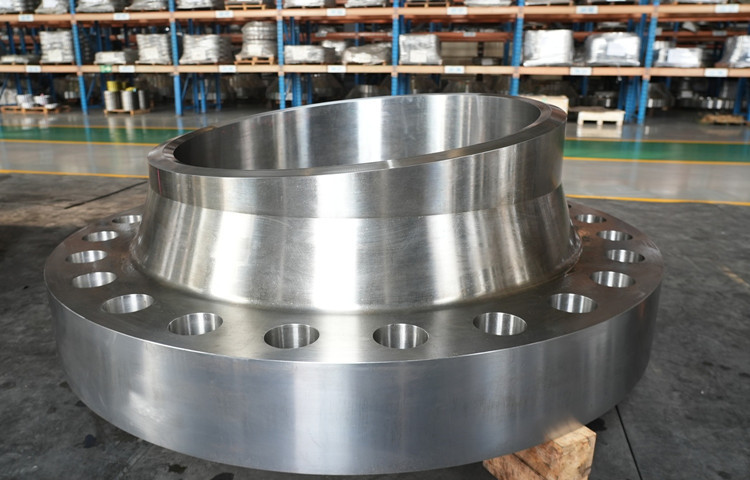
2. Principles of the Forging Process
During forging, a metal workpiece (often referred to as a "billet" or "blank") is placed between dies or on an anvil. Compressive force is applied to induce plastic deformation in the metal. In closed-die forging (or impression-die forging), the metal is forced to flow and fill the die cavity, resulting in a precise final shape.
3. Key Characteristics of Forged Parts
Forged parts possess unique metallurgical characteristics that distinguish them from castings or machined parts:
1) Optimized Grain Flow: Unlike machining, which cuts through the metal's natural grain flow, forging aligns the internal grain structure with the part's precise contours.
2) Elimination of Internal Defects: Powerful compressive forces close internal voids, cavities, and porosity often found in cast metals, resulting in a denser, more uniform material.
3) Superior Strength-to-Weight Ratio: Continuous, unbroken grain flow eliminates weak points, allowing forged parts to exhibit exceptional strength and toughness without adding unnecessary weight.
4. Advantages of Forged Parts
1) Enhanced Fatigue and Impact Resistance: Forged parts can withstand repeated stress cycles, impact loads, and extreme temperatures without cracking or failing.
2) Superior structural integrity and reliability: Thanks to a dense, defect-free microstructure, forgings are the preferred choice for safety-critical applications.
3) High material utilization: Modern closed-die forging technology enables the production of "near-net-shape" parts—components with dimensions extremely close to the final specifications—thereby minimizing material waste and reducing the need for extensive subsequent machining.
4) Long-term cost-effectiveness: Despite higher initial tooling costs, the durability of the dies and high production rates make forging highly cost-effective for mass production.
5. Limitations of forging
1) High initial tooling costs: Designing and precision-machining forging dies is both expensive and time-consuming; consequently, forging is less economical for small-batch production or prototyping.
2) Geometric limitations: Closed-die forging is constrained by equipment capabilities and the flow characteristics of the metal when filling deep, narrow, or highly complex die cavities.
3) Need for post-processing: Most forgings require subsequent CNC machining, grinding, or heat treatment to meet final dimensional tolerance and surface finish requirements.
6. Common industries and applications
Due to their unmatched reliability, forgings are widely used in industries where component failure is not an option:
1) Automotive industry: Engine crankshafts, connecting rods, transmission gears, and steering knuckles—components that must withstand continuous rotational stress and vibration.
2) Aerospace: Turbine disks, landing gear assemblies, and structural brackets—components requiring an exceptional strength-to-weight ratio.
3) Oil and gas: Wellhead equipment, valves, flanges, and drill bits—components that must withstand extreme pressure, heavy loads, and corrosive environments.
4) Agricultural and construction machinery: Heavy-duty, high-wear components such as plowshares, excavator bucket teeth, and track links, which must endure severe impact and abrasion. Hand tools: Wrenches, pliers, hammers, and chisels—tools that rely on the inherent toughness of forged steel to ensure they do not break or shatter under load.
Summary
In short, forging is a process that shapes metal by "squeezing" it under immense pressure, and forgings are the resulting products. Although forgings may entail higher initial costs compared to castings or machined parts, their optimized grain flow, superior strength, and excellent fatigue resistance make them the "gold standard" for high-performance and safety-critical engineering applications.

