- tyler@kirail.com
- +86 15603721115
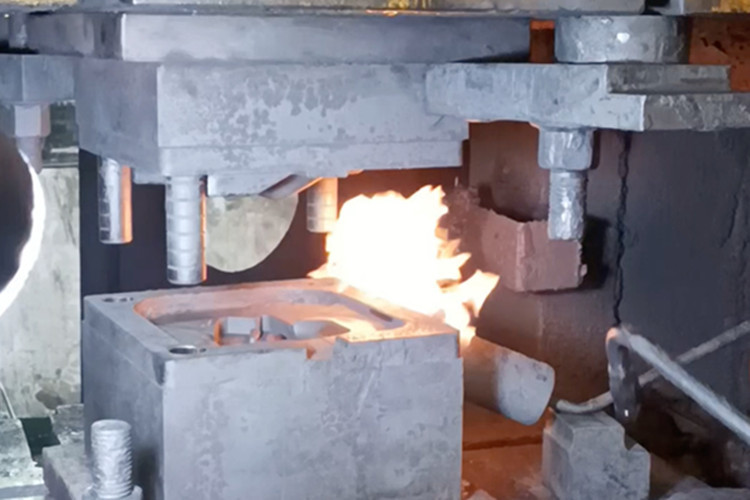
Drop forging is a highly efficient metalworking process in which metal is shaped by placing it between two dies and subjecting it to repeated impacts from a heavy hammer or press. It remains one of the oldest and most reliable methods for manufacturing high-strength, durable metal components.
Below is a detailed explanation of drop forging and how the process works.
How Drop Forging Works (Step-by-Step)
The process utilizes impact energy to force the metal to flow and take on a specific shape. Although mechanical technology has advanced significantly over time, the core steps remain unchanged:
1. Heating the Billet:
A piece of raw metal (known as a billet or blank) is heated to a specific temperature in a forge furnace or induction furnace (typically 1,100°C to 1,300°C / 2,000°F to 2,400°F for steel). This renders the metal highly plastic, making it easy to deform without cracking. (Note: While cold drop forging is possible for softer metals like aluminum or low-carbon steel, hot drop forging is far more common.)
2. Positioning:
The heated billet is quickly transferred and placed onto the bottom die, which is securely fixed to the anvil or machine bed of the forging equipment.
3. The "Drop" and Impact:
The upper die, attached to a heavy moving ram (or hammer head), is raised and then driven downward to strike the metal. This downward force can be generated by gravity, compressed air, steam, or hydraulic systems. The hammer strikes the metal repeatedly at high speed (typically 80 to 120 blows per minute), forcing the metal to flow and fill the contours of the die cavity.
4. Trimming (Deburring):
As the dies close, a small amount of excess metal is squeezed out at the parting line where the dies meet. This excess material is known as "flash" (or burr). Once forging is complete, the workpiece is sent to a trimming press to have the flash removed. 5. Finishing:
The forgings may subsequently undergo heat treatment (quenching and tempering) to achieve the desired hardness, followed by light machining or surface finishing to meet precise dimensional tolerance requirements.
Two Main Types of Drop Forging
Drop forging is classified based on how the dies interact with the metal:
1. Closed-Die Forging (Impression-Die Forging)
* Working Principle: The upper and lower dies contain precise negative impressions (cavities) of the final part. When the hammer drops, the dies fully enclose the workpiece, forcing the metal to fill every detail of the cavity.
* Applications: Suitable for the mass production of complex, high-precision parts with strict tolerance requirements (e.g., engine connecting rods, gears, and wrenches).
2. Open-Die Forging (Free Forging)
* Working Principle: The dies are typically flat or have simple shapes (such as V-blocks or round anvils) and do not fully enclose the metal. After being struck by the hammer, the metal is repositioned—either manually or mechanically—between blows, allowing it to be gradually elongated, bent, or shaped.
* Applications: Suitable for large, heavy, or custom-made parts (e.g., massive marine shafts, large rings, or custom architectural components) where the use of closed dies would be prohibitively expensive or impractical.
Why Use Drop Forging? (Key Advantages)
Drop forging is the preferred process for manufacturing critical, high-stress components due to its unique advantages:
1. Superior Strength and Grain Flow: Powerful compressive forces eliminate internal voids, air pockets, and porosity. More importantly, the process aligns the internal crystalline "grain flow" with the part's precise contours. Much like the grain in wood, this directs maximum strength to the areas of the part subject to the highest stress.
2. High Fatigue and Impact Resistance: Thanks to the dense metal structure and optimized grain alignment, drop-forged parts significantly outperform cast or machined components when subjected to repetitive impact loads and vibrations.
3. Material Utilization: When machining parts from solid steel blocks, more than 50% of the material may be wasted as chips; in contrast, the drop forging process shapes parts to "near-net shape," utilizing almost all raw material (requiring the removal of only minimal flash).
4. Repeatability: In closed-die forging, once the dies are properly set up, every part produced is virtually identical, ensuring consistent quality in mass production.
Common Applications
Thanks to its unmatched strength-to-weight ratio and reliability, drop forging is often a mandatory requirement or the preferred manufacturing method in industries where component failure cannot be tolerated:
1. Automotive Industry: Crankshafts, connecting rods, transmission gears, and steering knuckles.
2. Aerospace: Turbine discs, engine shafts, and landing gear components.
3. Hand Tools: Wrenches, pliers, hammers, and chisels (tools that must withstand massive impact without fracturing).
4. Heavy Machinery and Energy: Mining equipment, drill bits, flanges, and high-pressure valves.
Summary
The drop forging process derives its name from the "dropping" action of the hammer or ram. This process combines high-temperature heating, immense impact force, and precision-engineered dies to transform simple metal billets into highly durable, structurally optimized components—parts that offer superior strength and reliability compared to those produced by almost any other manufacturing method.

