- tyler@kirail.com
- +86 15603721115
If you are referring to forging a workpiece or using a forge while facing south, the answer is no—simply facing south generally does not make the steel magnetic.
However, there is a related phenomenon worth noting:
* Steel can be magnetized by the Earth's magnetic field, though this effect is usually very weak.
* The heating and mechanical deformation involved in forging can affect the steel's magnetic properties.
* Repeated hammering while the steel is aligned with the Earth's magnetic field can induce some residual magnetism, particularly in certain ferromagnetic steels.
* Using strong magnets or electric currents is a much more effective way to magnetize steel.
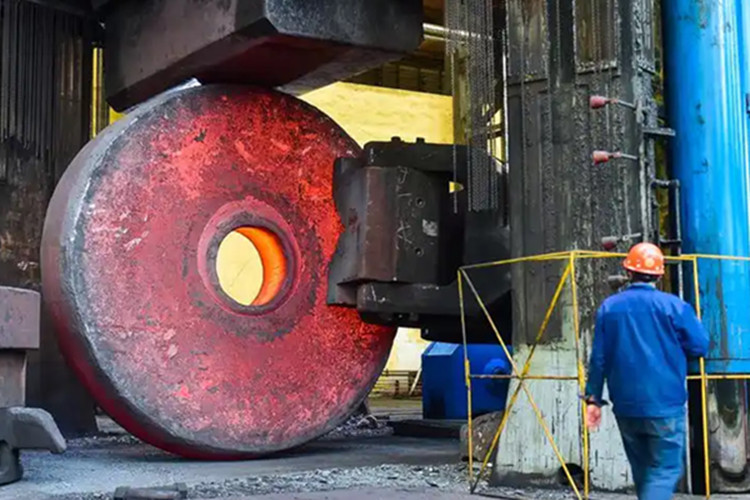
What happens to steel during forging?
The key factor is temperature, not the direction you are facing.
For ordinary carbon steel, heating it above the Curie temperature (approximately 770°C / 1418°F) causes it to lose its ferromagnetism and become paramagnetic; cooling it below this temperature restores its ferromagnetism.
In short:
Cold steel → Magnetic
Heated above Curie temperature → Non-ferromagnetic
Cooled below Curie temperature → Ferromagnetism restored
The steel's final magnetic state depends on its composition, heat treatment process, deformation history, and the surrounding magnetic environment.
If you asked this question because you heard that blacksmiths should forge steel facing north-south to magnetize it, I can explain the origins of this idea and the actual physics behind it.

