- tyler@kirail.com
- +86 15603721115
To better understand forging, let's discuss some common forging defects. Forging defects are mainly divided into three categories, with the following causes and manifestations:
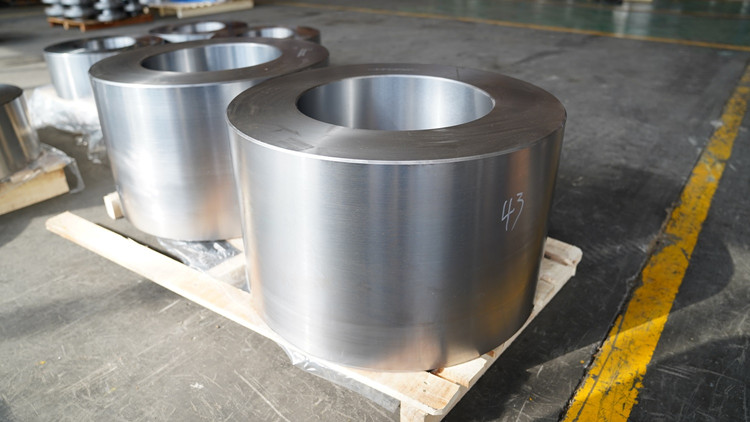
1. Raw Material Defects
1) Surface cracks: Cracks or subcutaneous bubbles on the surface of the raw material expand during forging.
2) Shrinkage cavity remnants: Incomplete removal of the ingot riser leaves residual shrinkage cavities after forging, leading to porosity and segregation.
3) Non-metallic inclusions: Impurities such as oxides and sulfides are mixed into the raw material, forming inclusions after forging.
4) White spots: Hydrogen precipitates during cooling, forming microcracks, commonly found in alloy steels.
2. Improper Process Defects
1) Folding: Uneven metal flow causes overlapping of surface metal.
2) Cracks:
* Heating cracks: Uneven temperature or overheating.
* Forging cracks: Excessive deformation speed or stress concentration.
* Cooling cracks: Excessive phase transformation stress.
3) Overheating and burning:
* Overheating: Coarse grains, reduced strength.
* Burning: Grain boundary oxidation or melting, rendering the material unusable.
4) Residual casting structure: Insufficient forging ratio, the cast structure is not eliminated.
5) Carbide segregation: Uneven distribution of carbides affects performance.
6) Banded structure: Alternating distribution of two phases reduces transverse plasticity.
7) Local underfilling: Mold or process problems lead to unclear contours.
3. Other Defects
1) Oxide scale pits: Unremoved oxide scale is pressed into the surface.
2) Coarse grains: Final forging temperature is too high or deformation is insufficient.
3) Irregular forging flow lines: Disordered flow lines, reduced performance.
4) Dimensional inaccuracies: Operation or mold problems lead to out-of-tolerance dimensions.

