- tyler@kirail.com
- +86 15603721115
Determining the qualification of a forging process hinges on the comprehensive verification of process parameter control, process inspection, and final product quality throughout the entire process. It involves not only inspecting the forging itself but also confirming the stability and consistency of the entire production process.
1. Process Parameter Control and Process Inspection
This is the first line of defense in determining process qualification, primarily monitored during the forging process.
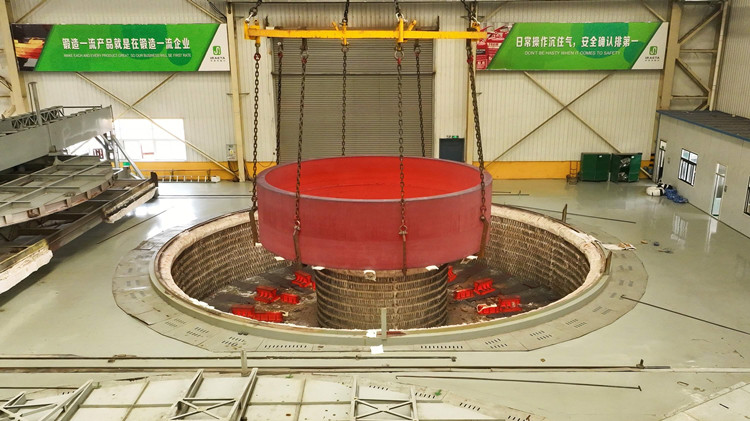
1) Heating Specifications: Check whether the quantity and location of the steel ingots or billets loaded into the furnace, heating rate, homogenization temperature, and holding time conform to the process specifications. Improper temperature control can lead to overheating, burning, or uneven heating.
2) Forging Operation Process:
* Initial and Final Forging Temperatures: Must be within the temperature range specified in the process.
* Deformation Dimensions: Check whether the deformation amount during the forging process (such as upsetting ratio and elongation rate) meets the process requirements. Insufficient or excessive deformation will affect the microstructure and properties.
* Riser Removal Amount: The removal amount must be performed according to the process specifications to ensure the internal quality of the forging.
3) Post-Forging Cooling: The cooling method (air cooling, furnace cooling, water cooling, etc.) and cooling rate of the forging must strictly adhere to the process specifications; otherwise, defects such as internal stress and cracks will occur.
2. The "Gold Standard" for Process Validation: Sample Inspection and Process Comparison Tests
This is the most direct and authoritative method of judgment, verifying the rationality of the process by inspecting process samples.
1) Sample Cutting: According to national standards, mechanical property samples must be cut from forgings from the same melting furnace and the same heat treatment furnace.
2) Key Inspection Items:
* Hardness Test: The most commonly used and simple method in production to determine the machinability of forgings and the degree of surface decarburization.
* Tensile Test: Determining tensile strength, yield strength, elongation, etc., is the most basic method for measuring the mechanical properties of materials.
* Impact Test: Measures the toughness (notch sensitivity) of a material, crucial for parts subjected to impact loads.
* Other Tests: Depending on part requirements, cold bending, fatigue, and high-temperature creep tests may also be performed.
3) Process Comparison Test: When product quality issues arise, process parameter comparison tests are used to analyze the root cause. For example, by changing parameters such as forging temperature and deformation, multiple sets of samples are prepared, and their macrostructure, microstructure, and mechanical properties are compared to determine the optimal process parameters.
3. The Ultimate Manifestation of Process Compliance: Forging Quality and Non-Destructive Testing
A qualified process must produce forgings that meet all quality requirements and pass rigorous non-destructive testing.
1) Appearance and Dimensions: The surface of the forging should be free of serious defects such as cracks, folds, and dents, and the geometric dimensions must conform to the drawing requirements.
2) Internal Quality:
* Macrostructure: Observed through low-magnification inspection (such as acid etching, fracture surface, sulfur marks), there should be no defects such as shrinkage cavities, porosity, white spots, or severe segregation.
* Microstructure: Observed under a metallographic microscope, the grains should be fine and uniform, with uniform carbide distribution and no abnormal decarburized layer.
3. Non-destructive Testing (NDT): This is the key means to ensure process qualification and that the forging is free of dangerous internal defects. For important forgings, 100% NDT is usually required.
* Ultrasonic Testing (UT): The most commonly used method for detecting internal defects, capable of detecting cracks, inclusions, shrinkage cavities, porosity, etc.
* Magnetic Particle Inspection (MT) / Penetrant Testing (PT): Mainly used to detect surface or near-surface defects such as cracks and folds.
4. Completeness of Process Documentation and Identification
Process documentation is the "legal basis" of the process, and its completeness and traceability are crucial aspects of determining process qualification.
1) Process Documentation: Complete forging process specifications, heat treatment process cards, and other documents are required, with all operating parameters verifiable.
2) Identification and Traceability: Forgings should have clear printed markings (such as furnace batch number, production number, and forging number) to ensure traceability throughout the entire process from raw materials to finished product.
Final Summary
Determining the qualification of a forging process is a systematic project requiring comprehensive evaluation from four dimensions: process control, sample verification, final product inspection, and document traceability. It's not just about "making it," but also about "making it correctly," "making it well," and "being able to make it consistently and repeatedly."

