- tyler@kirail.com
- +86 15603721115
Forging and cold heading are both metalworking processes, but they differ significantly in their processing methods and principles.
Processing Methods
1. Cold heading is a pressure processing technique that uses impact force to compress the crystal structure of the blank, resulting in higher strength and toughness. Cold heading is commonly used for machining metal blocks, shaft parts, etc.
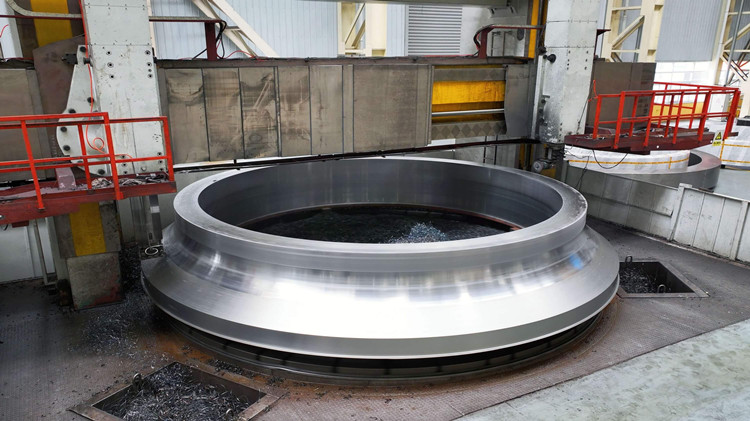
2. Forging, on the other hand, involves using hammering or pressure to plastically deform metal materials, thereby obtaining a workpiece of the desired shape and size. Forging can process various metal materials, such as steel, aluminum, and copper.
Processing Principles
1. Cold heading removes a portion of the material from a blank or semi-finished product to obtain a finished or semi-finished product; it is a subtractive processing technique.
2. Forging, however, uses the plastic deformation of metal to transform a blank into a finished or semi-finished product; it is an additive processing technique.
Forging Materials
Forging materials primarily consist of carbon steel and alloy steel of various compositions, followed by aluminum, magnesium, copper, titanium, and their alloys. Materials can exist in various initial states, including bars, ingots, metal powder, and liquid metal. The ratio of the cross-sectional area of the metal before deformation to its cross-sectional area after deformation is called the forging ratio. Correctly selecting the forging ratio, appropriate heating temperature and holding time, appropriate initial and final forging temperatures, and appropriate deformation amount and speed are crucial for improving product quality and reducing costs.
Most small and medium-sized forgings use round or square bars as blanks. Bars have uniform and good grain structure and mechanical properties, accurate shape and dimensions, and good surface quality, facilitating mass production. With proper control of heating temperature and deformation conditions, high-performance forgings can be produced without large forging deformation.

