- tyler@kirail.com
- +86 15603721115
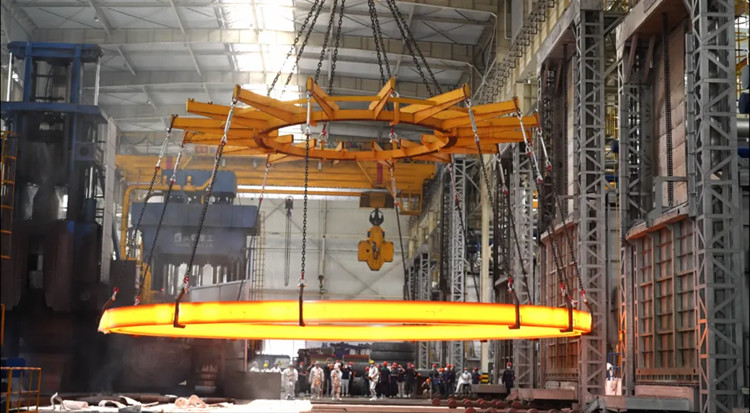
Precision forging is a process where metal is preheated and then pressed into the desired shape using forging equipment of varying tonnage.
Precision casting is a metal forming process where molten metal is poured into a shell mold, the product is cut from the mold after cooling, and the excess material is removed by polishing to obtain the final product.
Why is precision forging performed?
After forging, the internal grain structure is refined. Therefore, the products produced by the precision forging process have higher strength than those produced by any other metalworking process.
Forging uses the natural grain flow of the metal to conform the grain flow to the contour of the unique geometry of each part. This grain flow contour is called flash, which can be removed by trimming dies. Therefore, usually at least two pairs of dies are required for precision forged parts.
Precision forging can provide a net-shaped product, which reduces further machining work and saves machining costs.
Precision Forging vs Precision Casting
Precision forging and precision casting are both metalworking processes used to manufacture precision metal parts. After precision forging or casting, secondary processing can be avoided or reduced, and near-net-shape or net-shape products can be obtained directly. In most cases, we can manufacture the same parts with these two precision processes. Here we will introduce the differences between precision forging and precision casting:
1. Different ways of metal forming
Precision forging is a process in which the metal is preheated and then pressed into the desired shape with forging equipment of different tonnages. Precision casting is a metal forming process in which the molten metal is heated into a shell mold, the product is cut out of the mold after cooling, and the excess material is removed by polishing to obtain the final product.
2. Fewer defects
During precision forging, the steel grains flow under high pressure, so there are almost no defects. However, during precision casting, casting defects are often detected due to errors in gate design and operation during pouring.
3. Precision forgings have higher strength.
Precision castings do not have the strengthening advantages brought by precision forgings. Precision forging is superior to precision casting in terms of predictable strength properties, and can produce high-quality workpieces with both ductility and durability, and ensure consistent quality throughout the production process.
4. Precision forgings are more flexible and cost-effective to produce.
Some precision castings with special properties require expensive materials and process control, and the delivery cycle is also quite long. In contrast, precision forgings are a model of forging processes that can adapt to various production cycles and shorten delivery cycles.
5. Precision forging has better responsiveness to heat treatment.
In precision casting, poor control of the melting and cooling processes may cause alloy segregation, resulting in uneven heat treatment, which affects the straightness of the finished parts. Precision forging can respond to heat treatment in a predictable state and provide stable and better dimensions.

