- tyler@kirail.com
- +86 15603721115
There are indeed many factors affecting forging quality. Let me summarize them for you; they can mainly be divided into these four categories:
1. Forging process parameters
1) Forging temperature: One of the most critical factors. Too high a temperature can lead to overheating or burning, causing grain boundary oxidation or even melting; too low a temperature reduces plasticity, increases deformation resistance, and easily causes cracks.
2) Forging speed: Too fast a deformation speed may lead to decreased plasticity due to work hardening, while too slow a speed may affect efficiency due to insufficient thermal effect.
3) Forging force and degree of deformation: Insufficient force or uneven deformation can lead to defects such as unbonded internal pores and coarse grains.
4) Cooling rate: Too rapid cooling after forging can easily cause defects such as cooling cracks and white spots, which need to be strictly controlled.
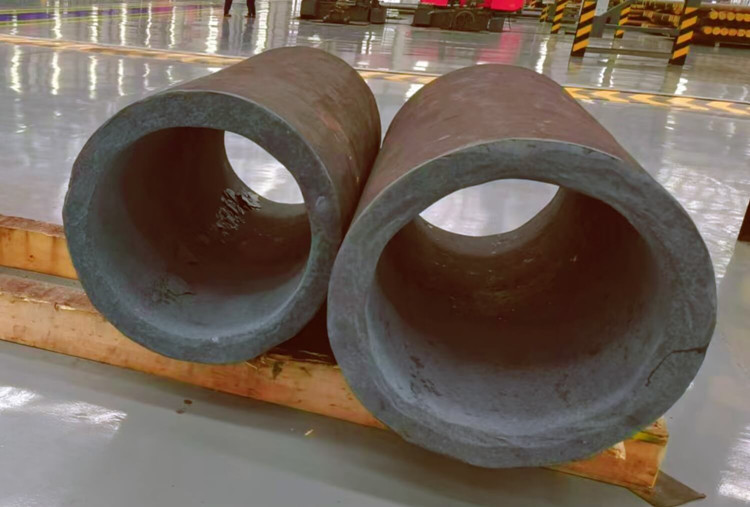
2. Raw Materials and Equipment
1) Raw Material Quality: Excessive chemical composition, high levels of impurities (such as sulfur and phosphorus), or defects like shrinkage cavities and porosity in raw materials directly affect the forming and final quality of forgings.
2) Equipment and Dies: The precision and stability of forging equipment, as well as the design and lubrication conditions of the dies, all affect the uniformity of deformation and the surface quality of the forgings.
3. Operation and Management
1) Standardized Operation: Improper control of heating temperature and time, or uneven deformation methods and lubrication during forming, can lead to defects.
2) Process Management: The rationality of the process flow and the rigor of inspection procedures (such as preventing missed inspections) are also crucial for ensuring quality.
4. Intrinsic Material Properties
1) Chemical Composition: Carbon content and alloying elements (such as Cr, Ni, and Mo) directly affect the plasticity, deformation resistance, and recrystallization temperature of the metal.
2) Internal Structure: The grain size and phase structure of the original structure (such as whether it is a single-phase solid solution) determine the forgeability of the metal.
In conclusion
Forging quality is the result of the combined effects of many factors, including people, machines, materials, methods, and environment. Problems in any of these aspects can affect the final product.

