- tyler@kirail.com
- +86 15603721115
Selecting the appropriate forging process is crucial for ensuring product quality meets the highest standards and satisfies your specific requirements. There are three main types of forging processes: open-die forging, closed-die forging, and rolled ring forging. Each process offers distinct advantages and is suited to different applications.
1. Open-Die Forging:
Also known as blacksmith forging or hand forging, open-die forging involves shaping metal by hammering it against an anvil. It is a versatile process suitable for small-to-medium-sized parts and is frequently used for custom work and low-volume production. The process is relatively simple and offers excellent design flexibility.
2. Closed-Die Forging:
Closed-die forging, also known as impression-die forging, involves compressing metal between two dies to shape it into the desired form. This process is ideal for high-volume part production and is commonly used in the automotive and aerospace industries. Compared to open-die forging, parts produced via closed-die forging offer superior precision and consistency.
3. Rolled Ring Forging:
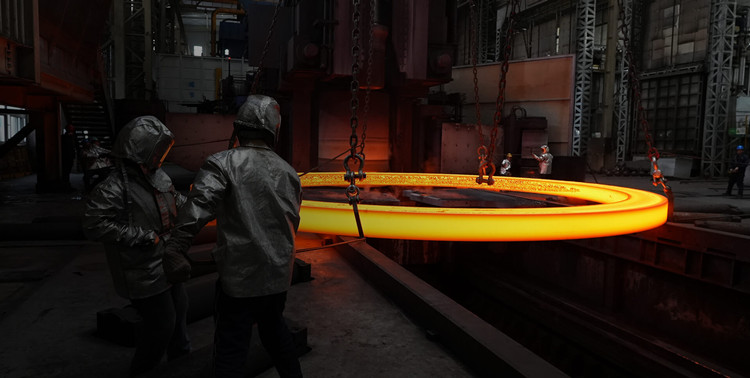
Rolled ring forging is a process in which a circular metal preform is rolled through a series of rollers to form a ring. This process is suitable for producing large, seamless rings that feature uniform grain flow and excellent structural integrity. It is widely used in the aerospace and power generation industries to manufacture components such as gears, bearings, and turbine parts.
Final Thoughts
When selecting the right forging process, it is essential to consider various factors, such as the size and complexity of the part, the required strength and durability, and the production scale. Partnering with an experienced forging manufacturer allows you to choose the optimal process and ensure your product meets your specific needs and requirements.

