- tyler@kirail.com
- +86 15603721115
Forging achieves the directional alignment of grain structure primarily through the following mechanisms and process methods:
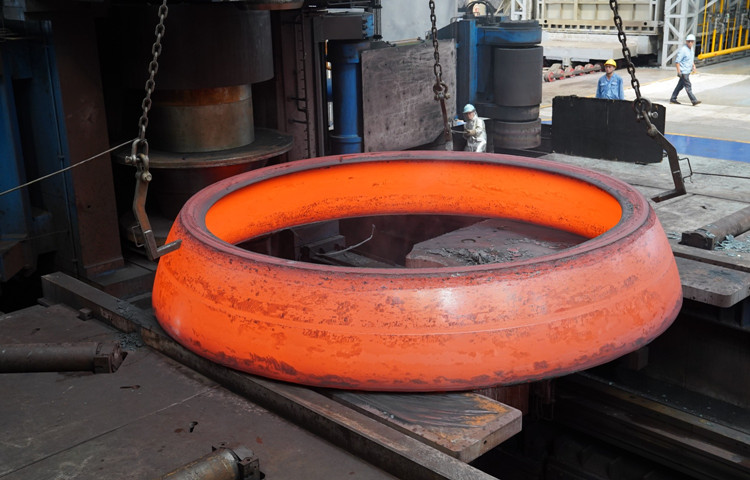
1. Plastic deformation guides directional grain flow
During forging, the metal undergoes directional plastic deformation in the solid state under external force. Initially disordered as-cast equiaxed grains and coarse dendrites are elongated and stretched along the principal direction of deformation; grain orientations gradually align, forming a continuous fibrous flow-line structure.
2. Dynamic recrystallization facilitates orderly reorganization
During forging at temperatures above the recrystallization point, deformed and fragmented grains undergo nucleation and growth via dynamic recrystallization. Newly formed grains grow preferentially along the direction of the principal deformation stress, further refining the directional alignment of the grain structure and replacing the original, disordered as-cast microstructure.
3. Precise control of process parameters optimizes alignment
By properly controlling the forging ratio and the initial/final forging temperatures, uniform and deep deformation is ensured. This prevents issues such as insufficient local deformation or abnormal grain growth, allowing grains to arrange themselves continuously along the directions of high stress experienced during actual service. The resulting directionally aligned grain structure avoids the flow-line interruption often caused by machining, thereby significantly enhancing the component's load-bearing performance.

