- tyler@kirail.com
- +86 15603721115
In short, yes, the density of a metal increases during forging, but this change is usually very small and largely depends on the initial state of the metal.
Here's a detailed explanation of how forging affects metal density:
1. Closure of Pores and Valves (Density Increase):
If the initial metal (e.g., an ingot or powder metallurgy preform) contains tiny cavities, shrinkage cavities, or internal voids, forging compresses the material and densifies it. This elimination of voids increases the overall bulk density of the part. Experiments with steel ingots show that forging can close these tiny cavities, resulting in a slight but measurable increase in density.
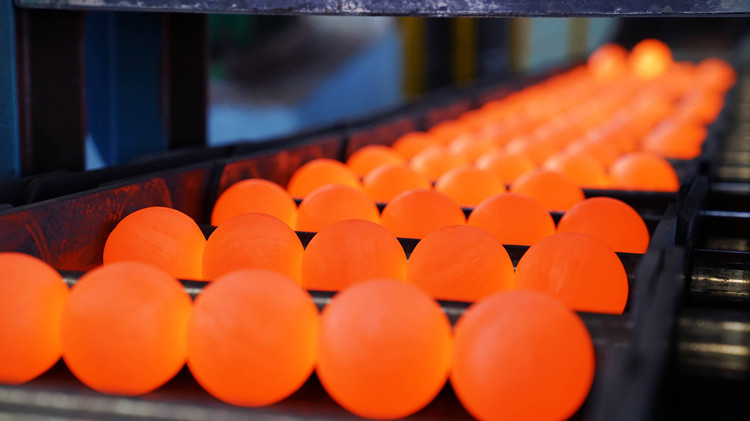
2. High-Density Metals (Little Change):
If the metal itself is already very dense and has no internal voids, forging has little or no effect on its density. The fundamental density of a metal depends on its atomic weight and the interatomic spacing within its crystal lattice. Conventional mechanical actions like forging do not significantly alter these atomic bonds or spacings.
3. Dislocations and Crystal Defects (Negative Net Change):
Forging causes plastic deformation in metals, moving dislocations and leading to work hardening. While theoretically removing crystal defects could slightly increase density, the forging process also introduces new defects. Therefore, the net density change at the atomic level is negligible and extremely complex to measure.
4. Risk of Density Reduction (Improper Forging):
In some cases, forging can actually reduce density. If the metal is improperly folded, forged too forcefully, or cooled unevenly, the forging process can introduce new microcracks, deposits, or voids into the material.
Summary
While forging can slightly increase the bulk density of a metal by extruding internal pores, its primary metallurgical purpose is not to alter density. Instead, forging is valued for its ability to refine grain structure, align grain flow with part shape, and significantly improve mechanical properties such as tensile strength, toughness, and fatigue resistance.

