- tyler@kirail.com
- +86 15603721115
Forging laps (also known as "folds" or "laminations") are a common surface defect in metal forging. They occur when the metal folds over itself during deformation and fails to bond or weld together properly at the fold. Visually, a lap appears as a seam on the surface of the forging, sometimes extending into the material's interior.
1. Causes of forging laps
Laps are primarily process-related defects caused by improper metal flow. Common causes include:
1) Improper die design: Die radii that are too small or incorrect geometries can force the metal to fold rather than flow smoothly.
2) Excessive material volume: Using an incorrect billet size or an excess of material can cause the metal to buckle and fold under pressure.
3) Improper operation: If the billet is positioned incorrectly in the die, the metal flow pattern may create a fold that is subsequently pressed tightly against the surface. Because the surfaces within the fold have already oxidized, they cannot weld together during the forging process.
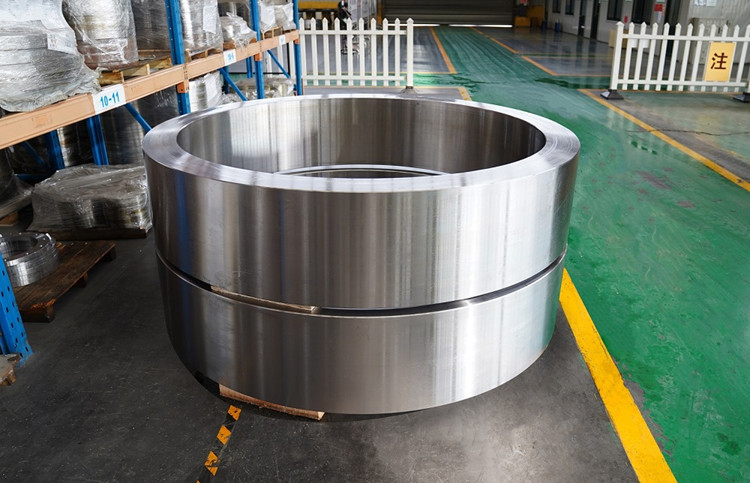
2. Why this is a problem
Forging laps are considered serious defects because they cause stress concentrations. Under working or cyclic loads, these folds can easily propagate into deep cracks, leading to sudden fatigue fracture and premature component failure.
3. Detection methods
Because laps can be shallow, open to the surface, and have a very shallow angle, they are sometimes difficult to detect. Common Non-Destructive Testing (NDT) methods include:
1) Visual inspection: Used to identify obvious surface seams.
2) Magnetic Particle Testing (MT): Highly effective for detecting surface and near-surface discontinuities such as laps.
3) Ultrasonic Testing (UT): Used to determine whether the lap extends deeper into the forging.
4. Preventive Measures
Preventing forging folds requires strict control over the forging process and tooling:
1) Optimize die and tooling designs to ensure smooth and uniform material flow;
2) Use appropriate billet dimensions and volumes to prevent folding caused by excess material;
3) In specific applications (such as the upsetting of cup-shaped part sidewalls), use custom-shaped billets with localized thickening to eliminate folding caused by clearance issues between the material and the die.

