- tyler@kirail.com
- +86 15603721115
Metal forging refers to the deformation of metal under pressure to obtain the desired shape and mechanical properties. Tools and equipment are generally divided into heating equipment, forging forming equipment, auxiliary hand tools, and post-processing equipment.
1. Heating Equipment
Heating raises the metal to the forging temperature, increasing plasticity and reducing deformation resistance.
1) Furnace: Oil-fired forging furnace, gas-fired furnace, resistance furnace. Used for batch heating of steel billets.
2) Induction Heater: Rapid local or overall heating; high efficiency, precise temperature control, widely used in modern production.
3) Pyrometer/Thermocouple: Measures the temperature of the workpiece to prevent overheating or scorching of the metal.
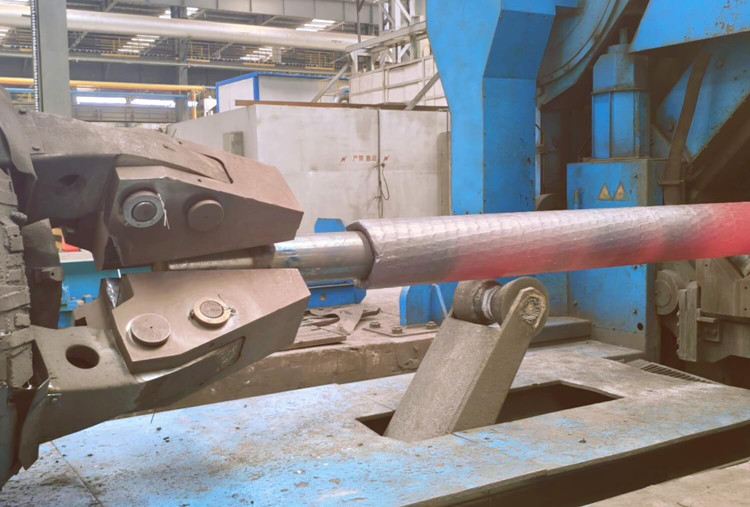
2. Main Forging Forming Equipment
These devices provide impact or hydrostatic pressure to deform hot metal.
1) Hammer Forging (Impact Force)
* Blacksmith's Hand Hammer: Used for small-scale manual forging.
* Power Hammer (Pneumatic Hammer/Steam Hammer): Pneumatic impact, suitable for small to medium-sized workpieces; common in general forging workshops. * Drop hammer: Utilizes the powerful impact of a falling weight, suitable for medium to large-sized die forgings.
2) Pressure forging (static pressure)
* Hydraulic forging press: High static pressure, suitable for large open die forgings and heavy parts.
* Mechanical forging press: High-speed circulating operation, used for batch die forging production.
* Screw press: Combines impact and pressure, resulting in high die forging precision.
3. Dies
1) Open die dies: Flat dies, V-shaped dies, pressure dies, rotary dies. Used for free forging without closed cavities.
2) Closed forging dies: Combination of upper and lower dies, with a cavity shape that meets requirements, used for die forging to produce near-net-shape parts.
3) Die holder: Fixes the die to the hammer or the punch and anvil of the press.
4. Handheld auxiliary tools
Used for clamping, positioning, and rough machining of hot workpieces:
1) Pliers: Various jaw shapes for clamping hot billets of different shapes.
2) Chisels/Hot Cutter: Used for cutting hot metal bars and forgings.
3) Punch: Used for punching holes in hot workpieces.
4) Reamer: Used to enlarge and adjust the diameter of holes.
5) Groove Press: Used to forge grooves and reduce cross-sectional thickness.
6) Edge Cutter: Used to round and shape external surfaces.
7) Anvil: A heavy-duty metal base used to support the workpiece during hammering; a core component of traditional blacksmithing.
5. Post-processing and Auxiliary Equipment
1) Trimming Machine: Removes burrs (excess material) from forgings.
2) Heat Treatment Furnace: Performs normalizing, annealing, quenching, and tempering treatments to adjust the mechanical properties of forgings.
3) Grinding Machine/Laminating Machine: Removes burrs, scale, and surface defects.
4) Quenching Tank: A container for holding quenching media (water, oil, polymer).
5) Safety Protective Equipment: Heat-resistant gloves, face shield, goggles, fire-resistant apron.
Brief Classification Summary
1. Heating Equipment: Furnaces, induction heaters, temperature measuring devices
2. Forming Equipment: Hammers, forging presses
3. Tools: Anvils, pliers, forging dies, punches, cutters, blank holders, forging dies
4. Post-processing Equipment: Trimming, heat treatment, grinding, quenching equipment
5. Personal Protective Equipment

