- tyler@kirail.com
- +86 15603721115
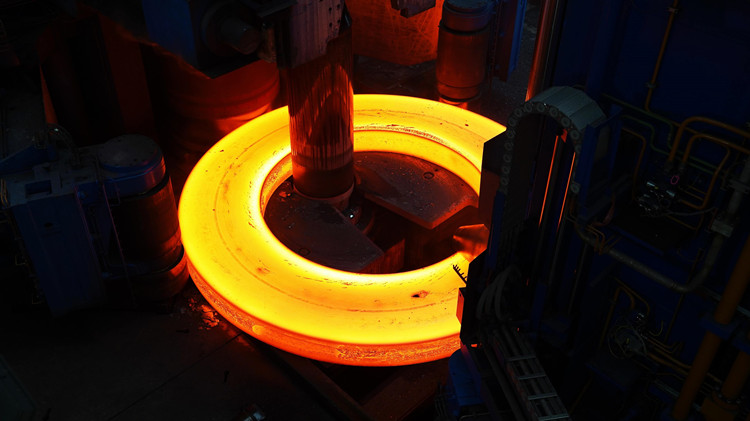
In metalworking, edge forging is a pre-forging process primarily used to shape the ends of workpieces and to gather or redistribute metal.It is typically performed as a preparatory step in closed-die forging (press forging) or open-die forging, before the final forming process (such as shaping or finishing).
Here is a detailed explanation of how edge forging works and its importance:
1. Purpose and Function
The primary function of edge forging is to longitudinally distribute metal, moving it from unwanted portions of the billet to the most needed portions. By using "edge indentations" in the die, metal is distributed to specific areas to facilitate complete filling of the final die cavity. This ensures that there is sufficient material in the correct locations to form the final part without defects such as underfilling or overlap.
2. Working Principle
This process is typically performed at the ends of bars or workpieces. During operation, metal flow is restricted horizontally but free vertically, thus shaping the ends into specific profiles.
3. Edge Finishing Types
Depending on the desired metal distribution for the next step, edge finishing can utilize different die profiles:
1) Concave Edge Finishing: This method gathers metal at the ends of the workpiece, making the cross-section larger or more convex. This excess material is then extruded into the complex cavity of the finishing die.
2) Convex Edge Finishing: This method reduces the cross-sectional area of the ends, pushing excess metal towards the center or other areas of the workpiece.
4. Other Applications
Besides pre-treating metal blanks with complex shapes, edge finishing is used to manufacture parts requiring rounded or beveled edges to meet aesthetic, safety, or functional requirements.
In summary
Edge finishing is an important pre-forming step that ensures the metal reaches precise position and volume before final forging.

