- tyler@kirail.com
- +86 15603721115
Manufacturers need high-precision, efficient, and cost-effective solutions for producing metal parts. Compared to forging, investment casting offers greater design flexibility, smoother surface finishes, and less material waste. As industries increasingly demand more complex and high-performance components, investment casting has become the preferred solution due to its ability to manufacture complex designs with minimal machining and material waste.
By understanding why investment casting is superior to forging, businesses can make informed decisions, improving product quality and efficiency while reducing costs. To learn how investment casting can benefit your business, please see our blog post on this topic.
1. Why Investment Casting is the Better Choice
Investment casting, also known as lost-wax casting, is a process that produces highly intricate, complex, and precise metal parts. Unlike forging, which relies on compressive force to shape metal, investment casting produces parts that are close to their final shape with minimal post-processing.
Precision casting can create complex geometries, internal cavities, and thin-walled structures, making it ideal for industries with extremely high precision and reliability requirements, such as aerospace, medical, and automotive. Furthermore, this process offers greater material versatility, enabling manufacturers to use a wide variety of metals and alloys, including those that are difficult to forge.
2. Advantages of Investment Casting
1) Complex Geometry:
Investment casting can produce parts with complex designs, fine details, and thin walls, which forging is either impossible or extremely costly. This is particularly advantageous for applications requiring lightweight, durable parts, such as turbine blades, medical implants, and aerospace components.
2) Superior Surface Finish:
The smooth surface finish of precision-cast parts eliminates or significantly reduces the need for subsequent machining. This saves time and costs and improves the performance of parts with high precision and tolerance requirements. Unlike forged parts, which typically require extensive secondary machining, precision-cast parts require minimal subsequent processing before use.
3) Material Efficiency:
Investment casting is a near-net-shape process, meaning minimal material waste during production. In contrast, forging typically requires excessive finishing and reshaping, leading to material loss and increased costs. By minimizing waste, investment casting helps manufacturers optimize raw material usage and reduce overall production costs.
4) Diverse Material Selection:
Investment casting can use a variety of metals and alloys, including stainless steel, titanium, aluminum, and high-temperature alloys. This flexibility makes it suitable for industries requiring specialty materials with specific properties, such as corrosion resistance, high-temperature resistance, and strength.
5) Precision Casting is an Economical Choice for Manufacturing Complex Parts:
Forging requires expensive molds, tooling, and additional machining to achieve complex shapes, while precision casting eliminates several manufacturing steps, thus reducing overall costs. Precision casting can produce highly intricate and complex parts without excessive material waste, making it the most economical choice for manufacturing complex parts.
3. Why Forging Failures
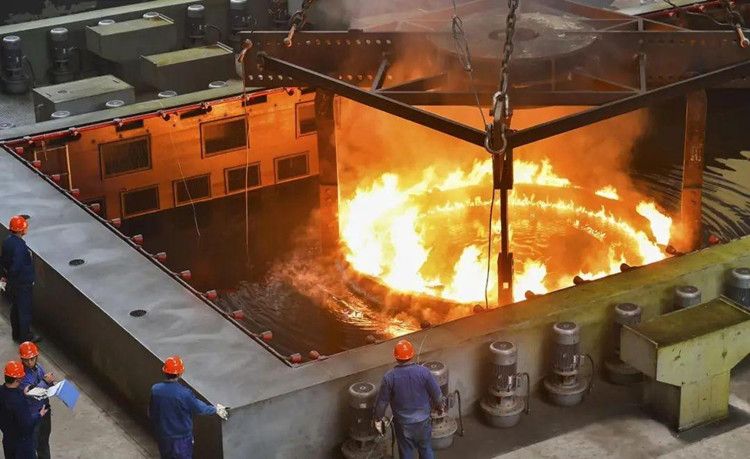
Forging is a mature metal forming process, but it lacks the design flexibility, precision, and efficiency of investment casting. While forging can produce high-strength parts, it has limitations in achieving complex geometries, fine features, and lightweight structures. Forgings typically require extensive secondary machining and post-processing, increasing production time and costs.
Furthermore, the forging process, due to the need for extensive finishing and reshaping, results in high mold costs and significant material waste. Forging is less efficient for producing small, delicate, or thin-walled parts, making it less than ideal for industries requiring sophisticated and complex designs. The inability to produce near-net-shape parts necessitates additional machining costs, further increasing overall costs and extending lead times.
4. Precision Casting for Peak Performance
Industries with extremely high requirements for precision, high-quality metal components, such as aerospace, medical, and automotive, benefit significantly from investment casting. Its unparalleled precision, cost advantages, and material utilization make it a preferred choice for manufacturers looking to optimize production without sacrificing quality.
As manufacturing requirements continue to evolve, investment casting remains the optimal solution for producing complex, high-performance metal parts. It is particularly advantageous for applications requiring high-precision tolerances, lightweight construction, and intricate designs that forging cannot achieve.
By leveraging the advantages of investment casting, companies can gain greater design freedom, reduce material waste, and increase efficiency. Companies seeking superior manufacturing solutions should prioritize investment casting over forging to achieve the highest performance, quality, and efficiency.

