- tyler@kirail.com
- +86 15603721115
Forging is a machining process that uses pressure to plastically deform a metal billet. It is widely used in industries such as aerospace and automotive manufacturing, but it also has certain limitations. The following are the main advantages and disadvantages of forging:
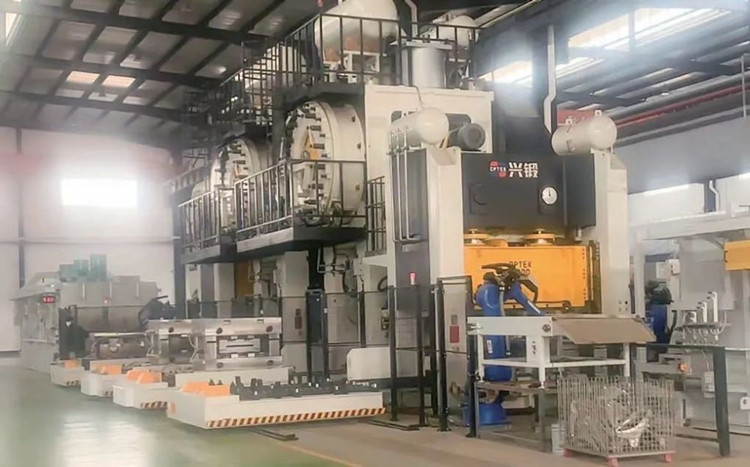
Advantages of Forging
1. Superior Mechanical Properties and Strength: Forging refines and aligns the grain structure of the metal along the shape of the part, eliminating internal voids and microcracks. This continuous grain flow gives forgings extremely high tensile strength, yield strength, and impact toughness, resulting in overall mechanical properties generally superior to castings or weldments.
2. Excellent Fatigue Resistance and High Reliability: Due to the elimination of weak points and the dense, defect-free internal structure, forgings exhibit extremely high resistance to wear caused by cyclic loading, effectively reducing the risk of sudden fracture and extending service life.
3. Better Material Utilization: Modern precision forging (such as closed-die forging) can achieve near-net-shape forming, minimizing scrap. Compared to traditional machining, it produces fewer chips and generally has higher material utilization.
4. Lightweight Advantage: While maintaining design strength, forgings (such as forged aluminum alloy wheels) are significantly lighter than castings or steel parts. This helps reduce the overall weight of vehicles, thereby improving acceleration performance and saving fuel.
5. Wide Material Adaptability: Forging is suitable for a variety of metal materials, including carbon steel, alloy steel, aluminum, magnesium, titanium and their alloys, meeting the needs of various demanding working conditions.
Disadvantages of Forging
1. High Initial Die Cost: The dies used to press and shape metals are extremely hard and require custom machining, resulting in a huge upfront investment. This makes forging economically impractical for short production cycles or small-batch prototyping.
2. Geometric and Design Limitations: Due to the physical properties of metal plastic deformation, forging cannot produce parts with complex internal structures or intricate features like casting. Overly complex details usually require extensive secondary machining to compensate, increasing costs and delivery time.
3. Safety hazards in the production process: Forging is usually carried out at high temperatures, accompanied by smoke, vibration, and noise. Furthermore, the enormous impact load applied by the forging equipment, if not operated properly, can easily lead to burns, machine tool injuries, and workpiece ejection.
4. Prone to specific process defects: If the die design is unreasonable, the forging temperature is not properly controlled, or worker errors occur, defects such as uneven flow distribution, insufficient local filling, misalignment, axial bending, and carbide segregation can easily occur, leading to a decrease in mechanical properties.
5. Unsuitable for porous parts: Forging cannot be used to produce parts that require mixing different metals or have porous structures (such as self-lubricating bearings, sintered carbide parts, etc.).

