- tyler@kirail.com
- +86 15603721115
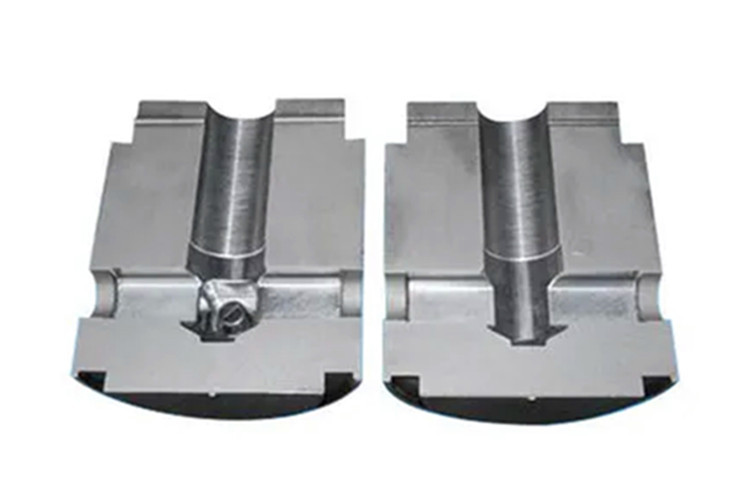
A forging die is a specialized heavy-duty tool or mold used to shape metal under high compressive forces, such as those generated by hammers or presses. Its primary purpose is to define the precise shape and dimensions of the final forging by guiding the metal through plastic deformation.
Key Characteristics and Uses
1. Metal Forming: Forging dies apply high pressure to metal materials, inducing plastic deformation to create specific, durable geometric shapes.
2. Stress Resistance: During operation, the maximum tensile stress experienced by the die typically occurs at the fillet—the rounded transition area connecting the sidewall of the cavity to the base. Due to this extreme environment involving high temperatures and pressures, the die must possess exceptional structural integrity.
Types of Forging Dies
1. Open-Die Forging (Free Forging): This process employs simple dies (typically flat plates, semi-circular, or V-shaped dies) that do not fully enclose the material. The metal is deformed through hammering—either manually or mechanically—making this method ideal for producing parts with relatively simple shapes, such as bars, billets, and spindles.
2. Closed-Die Forging (Impression-Die Forging): In this method, the metal is placed within a device—similar to a casting mold—that completely encloses the material. Such dies often consist of two or more sections (or stations); the workpiece moves between these stations to complete the forging process in stages. This enables the production of components with high precision and complex geometries.
Material Composition
Forging dies are subjected to extreme mechanical wear and thermal fatigue. Consequently, they are typically manufactured from high-performance tool steels (such as H13, 5CrNiMo, or H21). These materials are selected for their high toughness, ductility, and fracture resistance. Carbon serves as the primary hardening element in these steels, while the microstructure resulting from heat treatment directly determines the die's ultimate performance and service life.
Design and Manufacturing
The production of forging dies involves precision machining processes such as milling, turning, grinding, and electrical discharge machining (EDM). High-quality die designs also incorporate specific features, such as the "blocker impression"; this cavity establishes the forging's general profile while omitting intricate details that might otherwise impede the initial flow of metal.
In summary
Forging dies are critical precision-engineered components in the manufacturing sector, enabling the transformation of heated metal blanks into robust, reliable, and dimensionally precise industrial parts.

