- tyler@kirail.com
- +86 15603721115
Forging
refers to a processing method that uses a forging machine to apply pressure to a metal blank to cause it to undergo plastic deformation, thereby obtaining certain mechanical properties, a certain shape and size. Forging can eliminate defects such as loose cast metal produced during the smelting process and optimize the organizational structure. At the same time, due to the retention of complete metal flow lines, the mechanical properties of forgings are generally better than those of similar materials. For important parts with large loads and harsh working conditions in related machinery, forgings are often used in addition to available rolled plates, profiles or welded parts.
Forging can be divided into free forging, die forging and flashless die forging
1. Free forging
Use impact force or pressure to deform the metal between the upper and lower anvils (anvils) to obtain the required forgings. This type of forging is mainly divided into manual forging and mechanical forging.
2. Die forging
Die forging is divided into open die forging and closed die forging. The metal blank is compressed and deformed in a forging die of a specific shape to obtain a forging. Die forging can be divided into cold heading, roll forging, radial forging and extrusion. CFS Forge specializes in closed die forging processes. We are able to forge parts made of steel, aluminum and copper.
3. Flashless die forging
Flashless die forging and flashless upsetting forging have high material utilization due to the absence of flash, and can complete complex forgings in one or several processes. Due to the absence of flash, the forging area is reduced and the required load is also reduced. However, it should be noted that the blank material should not be completely limited. To this end, the blank volume should be strictly controlled, the relative position of the forging die should be controlled, and the forging should be measured to reduce the wear of the forging die.
Features
Compared with castings, the microstructure and mechanical properties of the metal after forging are improved. After the casting structure is hot-worked and deformed by forging, due to the deformation and recrystallization of the metal, the original coarse dendrites and columnar grains are transformed into equiaxed recrystallized structures with fine grains and uniform size, so that the original segregation, looseness, pores, slag inclusions and other structures in the ingot are compacted and welded. The compacted structure improves the plasticity and mechanical properties of the metal. The mechanical properties of the casting are lower than those of the forgings of the same material. Moreover, forging can ensure the continuity of the metal fiber structure, so that the fiber structure of the forging is consistent with the shape of the forging, and the metal streamline is complete, thereby ensuring that the forgings produced by precision die forging, cold extrusion, and warm extrusion have good mechanical properties and a long service life, which are better than castings.
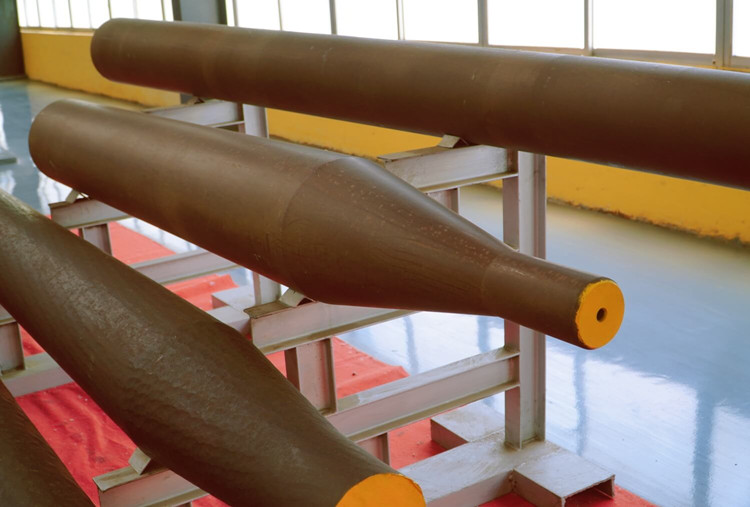
Rolling
The metal billet is rolled using the gap (various shapes) of a pair of rotating rollers. Due to the compression of the rollers, the cross section of the material is reduced and the length is increased. This is the most common method of producing steel, such as profiles, plates and pipes.
According to the movement mode of the rolled piece, the rolling method can be divided into three types: longitudinal rolling, transverse rolling and oblique rolling.
1. Longitudinal rolling
The process of plastic deformation of metal when it passes through two rolls rotating in opposite directions.
2. Horizontal rolling
The direction of movement of the deformed rolled piece is consistent with the direction of the roll axis.
3. Oblique rolling
The rolled piece moves in a spiral shape, and the rolled piece is not at an angle to the roll axis.
Advantages
It destroys the casting structure of the ingot, can refine the grains of the steel, eliminate structural defects, thereby making the steel structure dense and improving the mechanical properties, which is mainly reflected in the rolling direction. To a certain extent, the steel is no longer isotropic, and the bubbles, cracks, and looseness formed during the casting process can also be welded under high temperature and high pressure.
Defects
1. The non-metallic inclusions (mainly sulfides, oxides and silicates) inside the steel are pressed into thin sheets after rolling, resulting in stratification (interlayer) phenomenon. Stratification greatly deteriorates the tensile properties of the steel in the thickness direction, and when the weld shrinks, interlayer tearing may also occur. The local strain induced by weld shrinkage is often several times the yield point strain and much larger than the strain caused by load.
2. Residual stress caused by uneven cooling. Residual stress refers to the stress generated by self-balance inside the steel when no external force is applied. Hot-rolled steels of various cross-sections have residual stress. Generally, the larger the cross-sectional size of the steel, the greater the residual stress. Although the residual stress is self-balanced, it still affects the deformation, stability, fatigue and other properties of the steel structure under external force.
3. The thickness and edge width of hot-rolled steel are not well controlled. We are familiar with the law of thermal expansion and contraction. The length and thickness of hot-rolled steel meet the standards at the beginning, but there will be a certain negative tolerance after cooling. The widening of the edge width and thickening of the thickness caused by the negative tolerance will become more and more obvious. Therefore, for large steel, the edge width, thickness, length, angle and edge of the steel cannot be too precise.
Differences between forging and rolling
1. The difference between the axial and radial mechanical properties of forgings is smaller than that of rolled parts, that is, the isotropy of forgings is much higher than that of rolled parts, so the life of forgings is much longer than that of rolled parts.
2. In terms of deformation degree, the deformation degree of forgings is much greater than that of rolled parts, that is, the effect of forging in breaking eutectic carbides is better than rolling.
3. In terms of processing cost, the cost of forging is much higher than that of rolling. For some key parts, workpieces that bear large loads or impacts, and some workpieces with complex shapes or very strict requirements, forging technology must be used.
4. Forgings have complete metal flow lines. Machining personnel destroy the integrity of metal flow lines after rolling, which greatly shortens the life of the workpiece.

