- tyler@kirail.com
- +86 15603721115
The promotion of closed forging in the company's forging workshop, as well as the development of processes such as fine forgings, fine forging tooth shapes, and forging oil grooves, have brought the forging process level to a new level.
The main forming defects of forgings include underfilling, folding, coaxiality tolerance, bruises, and oil groove deformation. Among them, forging folding is the most difficult to control and not easy to detect - metal deformation, flow and fusion of oxidized surface metal form folding.
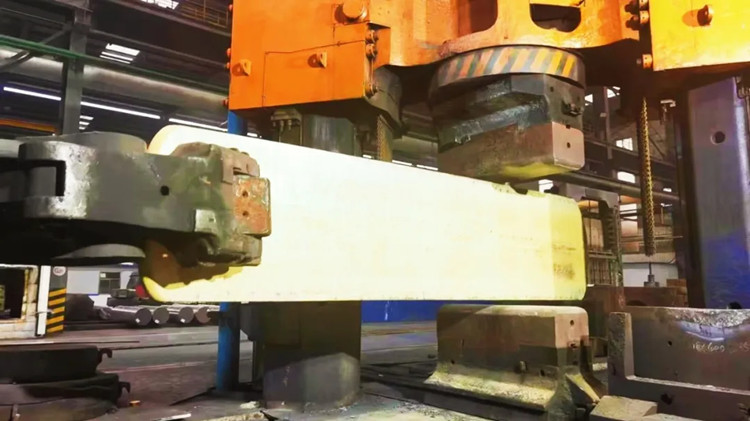
Folding reduces the bearing area of the component, and often becomes a fatigue source during work due to stress concentration at this point. In subsequent processes (mainly heat treatment), folded parts often expand at the end of the folding and form cracks at the expanded part; the end is sharp and its surface is generally free of oxidation and decarburization. Folding has become the cause of crack formation, so folding is extremely harmful to forgings. Technical documents stipulate that forgings are generally not allowed to fold.
Forging folding is difficult to detect through visual inspection, and it is difficult to distinguish from cracks generated in subsequent processes and difficult to analyze, so it should be controlled as early as possible during the forging process. However, due to its complex causes and hidden defects, it is difficult to avoid external transfer.
On the basis of strengthening communication between processes and serving the previous processes, the forging workshop often assists in finding defects, and jointly finds and solves problems, brainstorms, works together, and "eliminates the false and retains the true". Using the advanced BIQ (BuiltIn Quality) co-casting quality management method, the folding is analyzed layer by layer from the aspects of folding phenomenon, cause, occurrence, elimination, etc., to improve the quality of forgings.

