- tyler@kirail.com
- +86 15603721115
Metal forging (or metal forming) is an ancient and fundamental metalworking process that shapes metal into desired forms by applying heat and pressure. Compared to other processing methods, this process imparts greater strength, durability, and superior mechanical properties to metals.
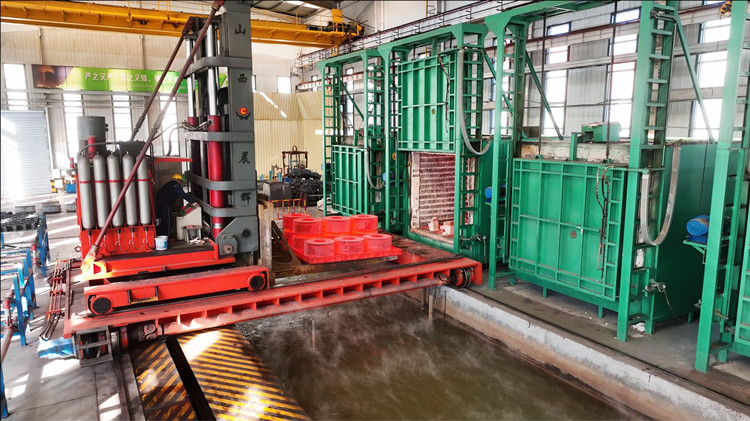
The pressure required for metal forming is applied using a press, mallet, hammer, or die. In the forging process of industrial steel and metals, the tools applying pressure are driven by compressed air, electricity, or hydraulics. The aim is to change the shape of the metal part without causing any breakage, thanks to heating the material to extremely high temperatures. Obviously, we are not talking about ordinary hammers, but devices that apply enormous pressure, reaching tens of thousands of kilograms.
As mentioned above, temperature plays a crucial role in metal forging.
One classification method is to distinguish between hot forging and cold forging. Hot forging is faster and more precise, typically involving heating the metal in a furnace; while cold forging processes the metal at room temperature or slightly above. Due to the lack of high temperatures, cold forging is limited to metals that have good ductility and malleability at room temperature, such as carbon steel alloys, aluminum alloys, copper alloys, and brass alloys.
1. Metal Forging: A Brief History
Today, metal forging is a fundamental technology in many industries, but its origins can be traced back to ancient times. In fact, metal forging is one of the oldest manufacturing processes; blacksmiths in ancient Greece and Rome used this technique to create various tools, swords, and even jewelry.
During the Industrial Revolution, metal forging underwent a fundamental transformation. The advent of the steam engine and the introduction of new technologies made it possible to mass-produce forged parts for manufacturing, such as machine parts, trains, ships, and other means of transportation.
2. Steel and Metal Forging Processes
It all begins with the preparation of metallic materials, usually in the form of ingots, billets, or bars. The metal is then heated to a high temperature to make it ductile and easy to plastically deform. Once the appropriate temperature is reached, steel or other types of metal can be shaped. There are many types of hot forging techniques; let's look at some examples.
1) Hammer Forging: Hammer forging is one of the most traditional forging techniques, using a hammer on an anvil or die to forge metal. The metal billet is heated to a malleable temperature, and then the blacksmith or operator shapes it by hammering.
2) Press Forging: Press forging involves applying pressure to a heated metal part using hydraulic or mechanical equipment. Depending on the material properties and the desired shape, this process can be performed under hot or cold forging conditions.
3) Open Die Forging: In open die forging, metal is pressed between dies without a predetermined shape, allowing for the forging of parts of various shapes and sizes. This method is often used to produce large parts, such as crankshafts or bolts.
4) Closed Die Forging: Closed die forging of steel or other metals involves forging a metal part into a specific shape using a closed die. Heated metal is placed between two dies, and high pressure is applied to obtain the desired shape.
3. Metal Forging Technology
There are many forging techniques used to obtain forged metals or steel, each with its specific application. In fact, different forging processes can be used depending on the final product. Below, we will introduce some of the most commonly used forging techniques.
1) Rolling: Rolling is a forging technique that deforms metal by repeatedly rolling it through a rotating cylinder. This process can produce flat sheets, plates, bars, and other metal products.
2) Extrusion: Extrusion forming is a technique that extrudes metal through a die to produce specific, complex cross-sectional shapes. It is often used to produce complex metal tubes and profiles.
3) Drawing: Drawing is a metalworking process that deforms metal by repeatedly passing it through one or more dies with progressively smaller apertures. This process is often used to produce metal wires, tubes, bars, or profiles with uniform cross-sections and precise dimensions.
4) Punching: Punching, also known as shearing or embossing, is a forging process that removes material through compression between two punches or between a punch and a die. This process is used to create complex shapes, holes, grooves, or ridges on metal parts.
4. Advantages of Metal Forging
Metal forging offers numerous advantages, ranging from improved mechanical properties to reduced impurities. In fact, forging enhances the strength, toughness, and durability of metals, making them suitable for high-pressure, high-stress applications. Furthermore, forged metals or steel exhibit higher dimensional accuracy than other machining processes, reducing the need for subsequent machining. Finally, during forging, impurities and porosity in the metal are eliminated through deformation, resulting in a more uniform microstructure, thus optimizing its subsequent applications.
5. Why Use a Protective Coating When Forging Metals?
During forging, oxidation reactions may occur, or the metal may come into contact with contaminants. Advanced Technology Products has developed a forging coating that can withstand the high temperatures required for hot working processes, protecting metals and alloys from these adverse effects while preventing gases from diffusing into the material's interior.

