- tyler@kirail.com
- +86 15603721115
Forging is a manufacturing process that shapes metal through hammering, pressing, or rolling. Its origins can be traced back to Mesopotamia around 4000 BC. This process naturally evolved from simple hammering, as early humans discovered that heated metal was easier to shape. Blacksmiths used furnaces to heat metal, enabling them to forge weapons and tools, such as swords and agricultural implements.
Over the centuries, forging has undergone significant advancements to meet the needs of modern industry. Let's delve deeper.
1. What is Forging?
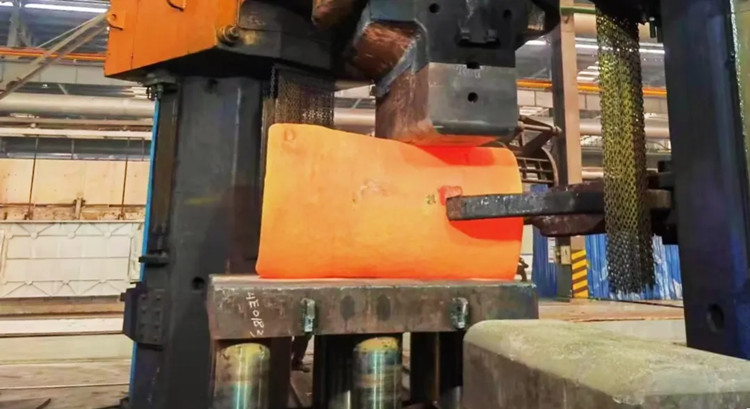
Forging is a manufacturing process that uses high temperature and pressure to shape metal into desired forms. When heated to high temperatures, the metal becomes soft and malleable. Manufacturers can then use manpower, hydraulic presses, and other specialized equipment to shape the metal relatively easily.
Today, most forged products are manufactured using electric presses. However, certain specialty products, such as Damascus steel knives, are still forged using traditional hand methods.
Metals commonly used in forging include alloy steel, aluminum, brass, carbon steel, copper, duplex steel, nickel, stainless steel, titanium, and tool steel. Generally, metals with low brittleness can be forged. On the other hand, materials such as cast iron, certain high-carbon steels, and other brittle alloys are unsuitable for forging because they cannot withstand impact loads.
Forged parts offer numerous advantages, including a finer grain structure, higher fatigue strength, and overall strength. Furthermore, the final product is free of defects such as porosity, cracks, and bubbles.
Forging processes allow for the large-scale production of parts through engineering design without using excessive amounts of metal. It is widely used in industries with high safety and performance requirements, including aerospace, automotive, and oil and gas, for manufacturing critical components such as crankshafts, high-pressure valves, ball joints, cams, and gears.
2. Forging Process Steps
High temperature and pressure soften most metals, allowing forging to effectively process a variety of materials. However, due to the varying properties of different metals, the forging process must be adjusted accordingly. Let's understand a typical forging process and its main steps:
1) Die Design and Manufacturing
Modern forging processes utilize dies to improve the precision, accuracy, and production speed of parts. Die design and manufacturing are the first steps in the forging process. Good dies offer numerous advantages, such as better grain flow, good surface finish, less scrap, higher dimensional accuracy, and more consistent product quality.
2) Billet/Ingot Preparation
The raw material for the forging process is steel billets or ingots with varying cross-sectional shapes. Based on product specifications, billets of the required length and cross-section are cut and fed into the forging production line.
3) Heating
Hammering cold metal is futile. In this step, the metal typically needs to be heated to the forging temperature in a furnace. The forging temperature range for steel is 850 to 1150 degrees Celsius, while the ideal forging temperature for aluminum can reach up to 500 degrees Celsius. The specific heating and holding temperatures during the forging process depend on the type of metal used.
4) Forging
Heated metal is fed into a die, where it is pressed into shape. Multiple passes through different dies may be required to achieve the final shape. Furthermore, the part may need to be reheated between each pressing.
5) Heat Treatment
Most parts require heat treatment after forging to improve their specific mechanical properties, including strength and hardness. Common heat treatment processes include annealing, tempering, quenching, normalizing, solution treatment, and surface hardening.
6) Cooling
Cooling is an excellent way to improve properties such as strength and grain structure. By employing different cooling methods and rates, the desired characteristics of the forging can be promoted.
7) Finishing
The part may require finishing before use, such as machining, finishing, and surface treatment. Additionally, applying specific coatings at this stage can enhance properties such as corrosion resistance and aesthetics.
3. How to Classify Forging Processes
Continuous research and advancements in the metallurgical field have given rise to a variety of forging processes. Today, various forging techniques are used to obtain different combinations of properties in the final product. To better understand various forging processes, we will use two main classification methods. Forging processes can be classified as follows:
1) Classification by Temperature
Based on temperature, forging processes are mainly divided into three types: cold forging, warm forging, or hot forging.
* Hot Forging
Hot forging is a primitive forging process that involves heating the metal to a temperature above its recrystallization temperature. For pure metals, this temperature is typically 0.3 to 0.4 times their melting point; for alloys, it is about half their melting point. At this high temperature, the metal's microstructure eliminates internal stress and forms new grains, thereby improving mechanical properties such as strength and ductility.
Once the metal reaches this temperature, compressive force is applied to shape it into the desired form. Hot-forged products require less compressive force because the material deforms more easily at higher temperatures.
However, hot forging also has some disadvantages. Compared to other processes, it has lower precision and a poorer final surface finish. Furthermore, the workpiece is prone to defects such as oxidation, decarburization, and burning.
* Hot Forging
In warm forging, the metal is heated to above room temperature but still well below its recrystallization temperature. Heating makes the metal more ductile. Compared to hot forging, warm forging yields a smoother surface and higher precision, but also has higher resistance to deformation. Therefore, warm forging requires greater compressive force to form the metal.
* Cold Forging
Forging processes performed at room temperature are called cold forging. In this process, the metal is formed directly by applying compressive force without heating. This technique yields excellent surface finish, high dimensional accuracy, and parts are ready for immediate use. Furthermore, cold forging is one of the easiest processes to automate.
However, this process requires high-tonnage presses because of the large compressive force required. Additionally, the parts are more prone to cracking due to their lower plasticity at low temperatures.
2) Tools and Equipment Used
We can also categorize forging processes by the tools and equipment used. Traditionally, blacksmiths forged metal using simple tools such as hammers and anvils. Over time, waterwheels drove large bellows, enabling blast furnaces to reach higher temperatures. Subsequently, with the advent of the Industrial Revolution, mechanical and hydraulic power presses and upsetting machines emerged, enabling the production of more complex-shaped parts through forging processes using dies. Furthermore, the mechanization of roll forging also developed during this period, utilizing robust rolls to manufacture slender parts with varying cross-sections.
4. Types of Forging Methods
Forging processes can be subdivided into various methods based on factors such as process layout, part type, degree of automation, and equipment used. This section will comprehensively consider these factors and outline some of the most commonly used forging processes. The methods we will introduce include the following:
1) Die forging (open die forging and closed die forging)
2) Press forging
3) Upsetting
4) Automated hot forging
5) Roll forging
6) Rolled ring forgings
7) Precision forging (cold forging)
8) Isothermal forging
9) Induction forging
10) Spin forging
1) Die Forging
Drop forging is a manufacturing process in which a drop hammer is fell from a specific height onto a workpiece placed on a fixed anvil. The force generated by repeated impacts gradually compresses the workpiece into the desired shape.
Forging processes can be divided into two types: open die forging and closed die forging. In open die forging, there is no die above the workpiece; the forging hammer is in direct contact with the workpiece surface. A variation of open die forging is called lock forging, in which the material is held in place by metal jaws, and a robotic arm (metal die) approaches the workpiece from two or four directions, thereby changing its shape.
Conversely, closed die forging completely encloses the workpiece within the die. Closed die forging is also called pressure forging. The desired final shape can be cast into one or both of the upper and lower dies. When the forging hammer strikes the upper die, it forces the metal to be forged to fill the die cavity.
Punch forging is a variation of drop forging. Unlike drop forging, which relies on gravity, punch forging uses high-pressure air or oil to accelerate the approach of the forging die cavities. The metal billet located between the dies absorbs the enormous impact force generated by the accelerating die movement, thus deforming it into the shape of the die.
2) Press Forging
The principle of press forging is similar to that of die forging; however, it does not rely on impact force, but rather on a sustained force over a longer period. It is a controlled extrusion, rather than a sudden impact.
The impact force of drop forging does not deform the core of the metal workpiece; its effect is limited to the surface layer. In contrast, the sustained pressure applied in press forging causes plastic deformation of the entire volume of the part. Forging presses can employ either cold forging or hot forging processes.
3) Upsetting
Upsetting, also known as upset forging, involves using a series of dies to deform or upset one end of a workpiece. This process is often used to increase the cross-sectional area of one end of a round bar to produce products such as nails, bolts, and screws.
The round bar is held in place by clamping dies while another die pushes towards the exposed end, compressing the round bar and changing its shape.
4) Automated Hot Forging
Automated hot forging is a fast and efficient method for mass-producing steel billets or finished products. Steel bars of a specified length are fed into the machine from one side of an automated hot forging machine. These steel bars are induction heated, descaled, cut, and forged into finished products within seconds inside a forging machine.
Parts may need to undergo multiple forming stages inside the machine. Parts output from forging machines are sometimes sent for cold forging or precision forging to improve the performance of the final product.
5) Roll Forging
Roll forging, similar to automated forging, is a special forging process that allows for the mass production of parts with unique cross-sections.
The roll forging process uses two opposing rolls to process long bars with flat or round cross-sections. The bar is compressed as it passes through the gap between the rolls, resulting in a reduction in thickness and an increase in length.
If the final product requires multiple processes, the part can be reversed after each process and passed through the same set or different rolls again.
Roll forging can be divided into hot forging and cold forging. Hot forging requires less compressive force. The roll forging process can give the workpiece an excellent grain structure.
6) Rolled Ring Forging
Rolled ring forging is a process that produces seamless metal rings through forging. The process begins by piercing the center of a cylindrical blank to form a ring. An idler wheel is positioned at the center of this hollow area. The workpiece is then rotated and deformed by two sets of different rollers.
A drive roller presses the workpiece between itself and the idler roller, gradually increasing the size of the annular hole. Axial rollers at the top and bottom press the surface of the annular hole to reduce its thickness (or cylinder height).
The final product is a seamless annular component with an excellent grain structure, consistent with the original workpiece. Rolled ring forgings are commonly used to manufacture critical components such as gears, clutches, and bearings, which require seamless structures for both functional and safety reasons.
7) Precision Forging
Precision forging, also known as near-net-shape forging or near-net-shape forging, is a forging process performed at temperatures far below those of hot forging, resulting in higher precision. For steel, the temperature range for precision forging is between 750 and 950 degrees Celsius (1380 to 1740 degrees Fahrenheit).
Precision forging is primarily a finishing process, rather than a standalone operation. Parts produced using other forging methods are sent to a precision forging plant for finishing before being put into use or undergoing further manufacturing processes.
8) Cold Forging
Precision forging can also be performed at near-ambient temperatures; this process is often called cold forging. This method yields highly accurate final dimensions and typically requires no additional finishing steps. However, it is not suitable for all types of metals, and lubrication is crucial for protecting the mating surfaces of the die. Cold forging is commonly used for forging soft metals such as aluminum.
9) Isothermal Forging
As the name suggests, isothermal forging is performed at a constant temperature. Throughout the forging process, the billet and die maintain a uniform temperature.
These specific conditions allow the metal to fully utilize its plasticity at the designated temperature. Isothermal forging is commonly used for forging aluminum because aluminum has a relatively low forging temperature compared to other metals, at 430 °C (806 °F).
Isothermal forging offers numerous advantages, including higher precision, lower defect rates, lower compressive forces, and greater material plasticity.
10) Induction Forging
Induction forging is not a standalone metal forging process, but rather a heating method used to reach forging temperatures. High-power induction coils can rapidly raise temperatures and are commonly used in large-scale production environments to shorten production cycles.
It can be applied to various processes by adjusting the heating device to suit different flow conditions.
11) Spinning
Burning is a specialized metal forging process used to create tapered or pointed shapes on hollow cross-sections (such as pipes). Borening is used to seal open ends or enlarge the circumference of pipe ends for connection to other pipe sections.
In this process, the material is first heated to forging temperature and then pressed into a die, thus changing the shape of the pipe end. Imagine fitting a hose onto a water outlet. The crimping process is visually similar, except that the metal tube retains its shape after being separated from the die. This is just one example. By adjusting the process parameters, a range of different results can be produced.
Conclusion
Forging offers significant advantages in metal processing. Forging is a cost-effective and versatile method for producing high-strength, high-reliability products suitable for critical applications. The refined grain structure formed by forging imparts superior directional strength and structural integrity to the product.
Therefore, this process is used to manufacture critical components such as crankshafts, railway wheels and tracks, vehicle axles, connecting rods, suspensions, gears, shafts, and bearings.
Forging is becoming increasingly prevalent, especially in the machining of metals such as titanium alloys and high-temperature alloys. With the application of advanced materials and simulation technologies, the precision and refinement of forging processes are continuously improving, and it is expected that this process will become mainstream in the coming decades.

