- tyler@kirail.com
- +86 15603721115
Forging is renowned for its superior mechanical strength, toughness, and excellent grain flow, but it is not a panacea. The process has significant limitations in terms of geometry, precision, economy, and material applicability.
The following is a comprehensive analysis of the limitations of forging:
1. Geometry and Design Limitations
Forging relies on compressing metal into a die, which limits the types of shapes that can be produced.
1) Inability to Form Complex Internal Cavities: Unlike casting, forging struggles to create complex hollow internal geometries. While simple holes can be punched, complex internal channels (such as those in engine blocks) cannot be directly forged.
2) No Undercuts: Forged parts must be able to be removed from the die. Therefore, undercuts (structures that lock the part in the die) cannot be included in the design.
3) Draft Angle Requirements: Vertical walls cannot be perfectly straight; they must include a draft angle (typically 3° to 7°) so that the part can be removed from the die without damaging the forging or the die.
4) Challenges in Machining Thin Sections and Sharp Corners: Metal cools rapidly when flowing into thin sections, potentially leading to incomplete filling (insufficient pouring) or excessive stress on the die. Sharp internal corners can cause stress concentration in the die, resulting in premature cracking; therefore, larger fillet radii must be used.
2. Dimensional and Surface Limitations
Forging is a "near-net-shape" process, meaning it can bring parts close to their final dimensions, but rarely achieves precise final dimensions.
1) Lower Dimensional Tolerances: Forging cannot maintain the same tight precision as CNC machining. Thermal shrinkage during metal cooling, die wear, and slight misalignment of the upper and lower dies all contribute to wider tolerance ranges.
2) Poor Surface Finish After Forging: Due to the extremely high temperatures the metal is heated, the surface oxidizes, forming a rough, flaky oxide layer. Furthermore, the high pressure can cause minor surface defects in the die itself. Forgings almost always require secondary finishing (e.g., shot peening or machining) to achieve a smooth surface.
3. Economic and Production Limitations
The economic model of forging is highly scale-dependent, making it less than ideal for certain production scenarios.
1) High Initial Die Costs: Closed-die forging uses large billets made of high-quality heat-treated tool steel, requiring extensive CNC machining and EDM. This results in very high upfront capital investment.
2) Uneconomical for Small Batch Production: Due to the high die costs, forging is generally unsuitable for prototyping or small-batch production (e.g., fewer than 500 pieces). For small batches, machining billets or 3D printing are generally more economical.
3) Long Manufacturing Cycles: From die design and simulation to ensure proper cavity filling, to manufacturing the physical die, the process from start to production of the first part can take weeks or even months.
4. Material Limitations
Not all metals can be forged; some are extremely difficult to forge.
1) Brittle Materials Cannot Be Forged: Forging requires the metal to undergo significant plastic deformation. 1) Low-ductility materials, such as standard gray cast iron or certain bismuth alloys, can crack or break under pressure during forging.
2) Challenges with high-strength alloys: While high-temperature alloys (such as Inconel or titanium) can be forged, they require enormous pressure, special heating environments (such as vacuum or argon atmospheres), and very slow deformation rates. This significantly increases costs and accelerates die wear.
3) Forging, while capable of producing very large parts, actually has upper and lower limits.
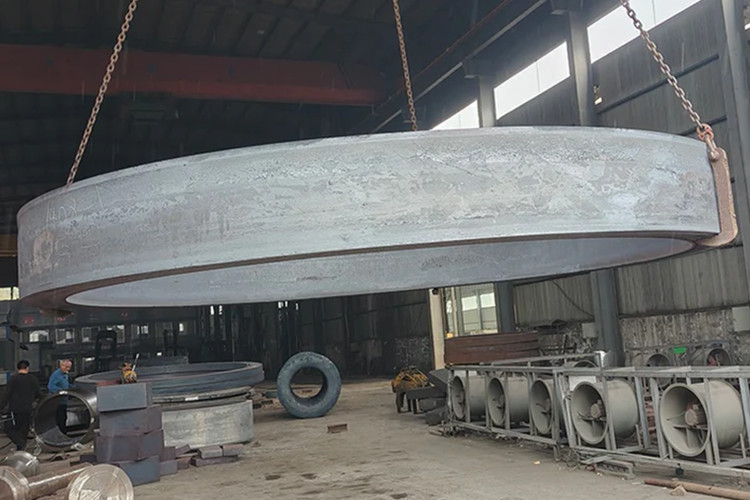
4) Upper limit (large parts): Forging ultra-large components (such as large ship crankshafts or aerospace wing spars) requires ultra-heavy-duty hydraulic presses (e.g., over 50,000 tons) and large furnaces. Only a very few factories in the world possess such equipment, making these parts extremely expensive and limiting supplier choices.
5) Lower limit (micro/small parts): Forging very small, lightweight parts (such as small gears or electronic connectors) is extremely inefficient. Setup time and die costs outweigh material savings. These parts are better suited for stamping, metal injection molding (MIM), or Swiss-thread machining.
Summary: When to Choose an Alternative?
Due to these limitations, engineers typically choose alternative manufacturing processes based on project requirements:
1) Choose casting over forging if: You need highly complex internal geometry, hollow parts, or complex external shapes that cannot be formed using molds.
2) Choose CNC machining over forging if: You need extremely high tolerances, excellent surface finishes, complex features, or your production volume is very low (1 to 100 pieces).
3) Choose sheet metal stamping/manufacturing if: The part is very thin, light, and has a large surface area relative to its thickness.
4) Choose metal injection molding (MIM) if: You need to mass-produce small, highly complex metal parts, but the part is too small or too complex for traditional forging processes.

