Specifications
* Manufacturing Processes: Open-die forging, closed-die forging, and CNC radial-axial ring rolling
* Size Range: Typical OD 120–1800 mm; ID per drawing; Wall thickness ≥ 10 mm
* Concentricity/Roundness: ≤ 0.5–1.0 mm (depending on size); End face perpendicularity ≤ 0.5 mm / 300 mm
* Heat Treatment: T6 / T651 / T73 (other tempers available upon request)
* Aluminum Alloys: 6061 · 6082 · 7050 · 7075 · 2024 · 5083 (2618 / 4032 available upon request)
* Inspection & Documentation: Ultrasonic Testing (UT) (per ASTM B594 / AMS-STD-2154); Dimensional inspection report; EN 10204 3.1 certification
* Processing Condition: As-forged/As-rolled; Rough machined; Finish machined per drawing
Types of Forged and Rolled Rings
Forged and rolled rings can be manufactured in various structural shapes based on load requirements, wall thickness, and connection designs. Rolled rings are typically used for large-diameter or thin-walled structures, whereas forged rings are commonly used for solid, flanged, or specially contoured components.
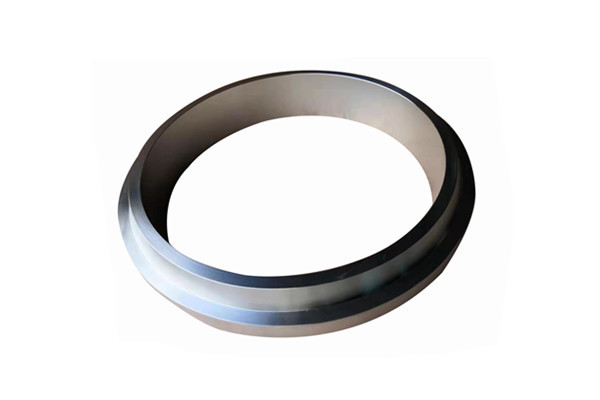
1. Seamless Rolled Rings
Produced via radial-axial ring rolling, these seamless rings feature continuous grain flow and uniform wall thickness, offering excellent structural integrity and dimensional stability.
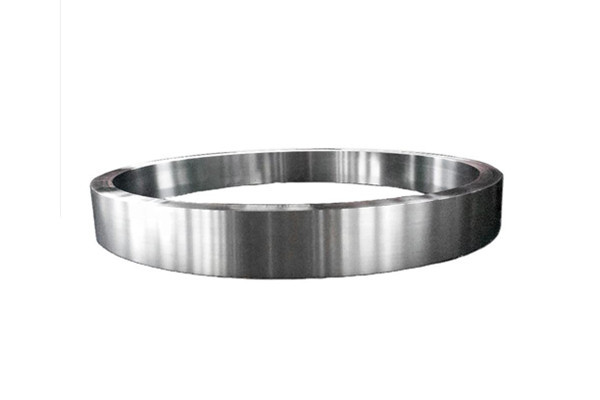
2. Large-Diameter Forged Rings
Produced using open-die forging or ring rolling, these large-diameter rings support structures with very large outer diameters, featuring controlled grain flow and high structural stability.
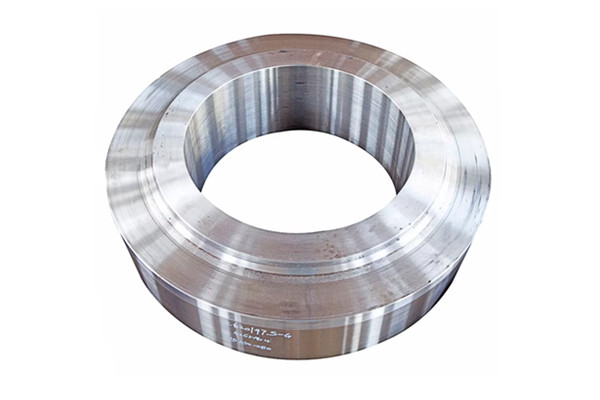
3. Solid Forged Rings
With full cross-sectional density, solid forged rings provide maximum load-bearing capacity and structural reliability for heavy-duty machinery components.
4. Hollow Forged Rings
Hollow forged rings feature reduced internal mass and optimized wall thickness distribution, supporting lightweight structural designs while maintaining mechanical strength.
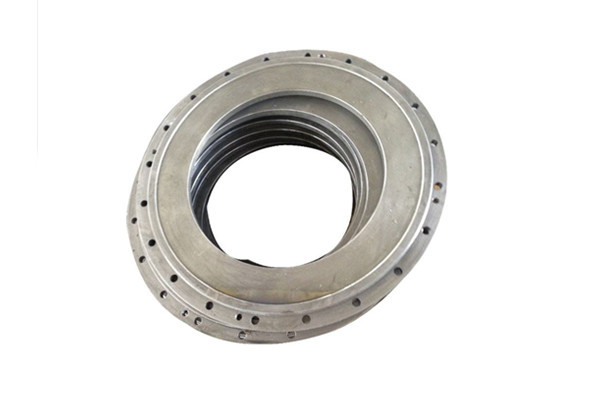
5. Flanged Forged Rings
Forged rings featuring integrated flange geometries, suitable for bolted connections, sealing interfaces, and structural joining applications.
6. Contoured Forged Rings
Forged rings with custom cross-sectional profiles—such as stepped, grooved, or polygonal geometries—designed for specialized mechanical interfaces.
7. Gear/Toothed Rings
Forged rings featuring external teeth, slots, or positioning features, typically used as precision transmission or positioning components.
8. High-Strength Rolled Rings
High-strength rolled rings for aerospace and energy applications.
Produced via controlled ring rolling processes, these rings are suitable for demanding structural and rotating components.
Quality Assurance
Our aluminum ring manufacturing capabilities encompass a comprehensive range of processes—including forging, rolling, heat treatment, CNC machining, and non-destructive testing—all integrated into a single production workflow. Ultrasonic testing complies with ASTM B594 or AMS-STD-2154 standards, while magnetic particle, penetrant, and radiographic testing are available based on project requirements. Why Choose Kingrail Parts?
* High-tonnage forging presses ensure grain refinement and stable mechanical properties
* Precision CNC turning, milling, and drilling—tolerances as tight as ±0.05 mm
* Heat treatment processes: annealing, T6/T651 aging, quenching, tempering, and stress relieving
* Industries served: aerospace, automotive, railway, energy, mold making, and industrial equipment
Quality Assurance
* Ultrasonic testing (UT) for internal defect detection
* Coordinate Measuring Machine (CMM) inspection and precision gauging
* Metallographic analysis, tensile testing, and hardness testing
* Rapid delivery—standard forged discs shipped within 7 days
* Engineering support provided, ranging from alloy selection to drawing optimization and process recommendations
Need More Assistance
Contact us for further information and a free quote.